Cockan Farm
DATE:
2025 / 2026
LOCATION:
Frizington, Cumbria
PARTNERS:
West Cumbria Rivers Trust, Turning Point
Creating woodland for nature recovery and community
Aims
Create a diverse mosaic of woodland habitats, including dense groves, open glades and wet woodland, to support a wide range of species.
Protect and enhance existing habitats, including wet flushes, watercourses and mature and veteran trees.
Improve water quality and provide shade for headwater streams.
Increase opportunities for community engagement and public access.
Sequester carbon through woodland creation.
Cockan Farm is located near Frizington on the western boundary of the Cumbria High Fells. Managed by the Mitchell family, Andrew, Helen and Elvis, the farm is being developed with nature recovery at its heart, using woodland creation to enhance biodiversity while protecting and restoring existing habitats across the holding.
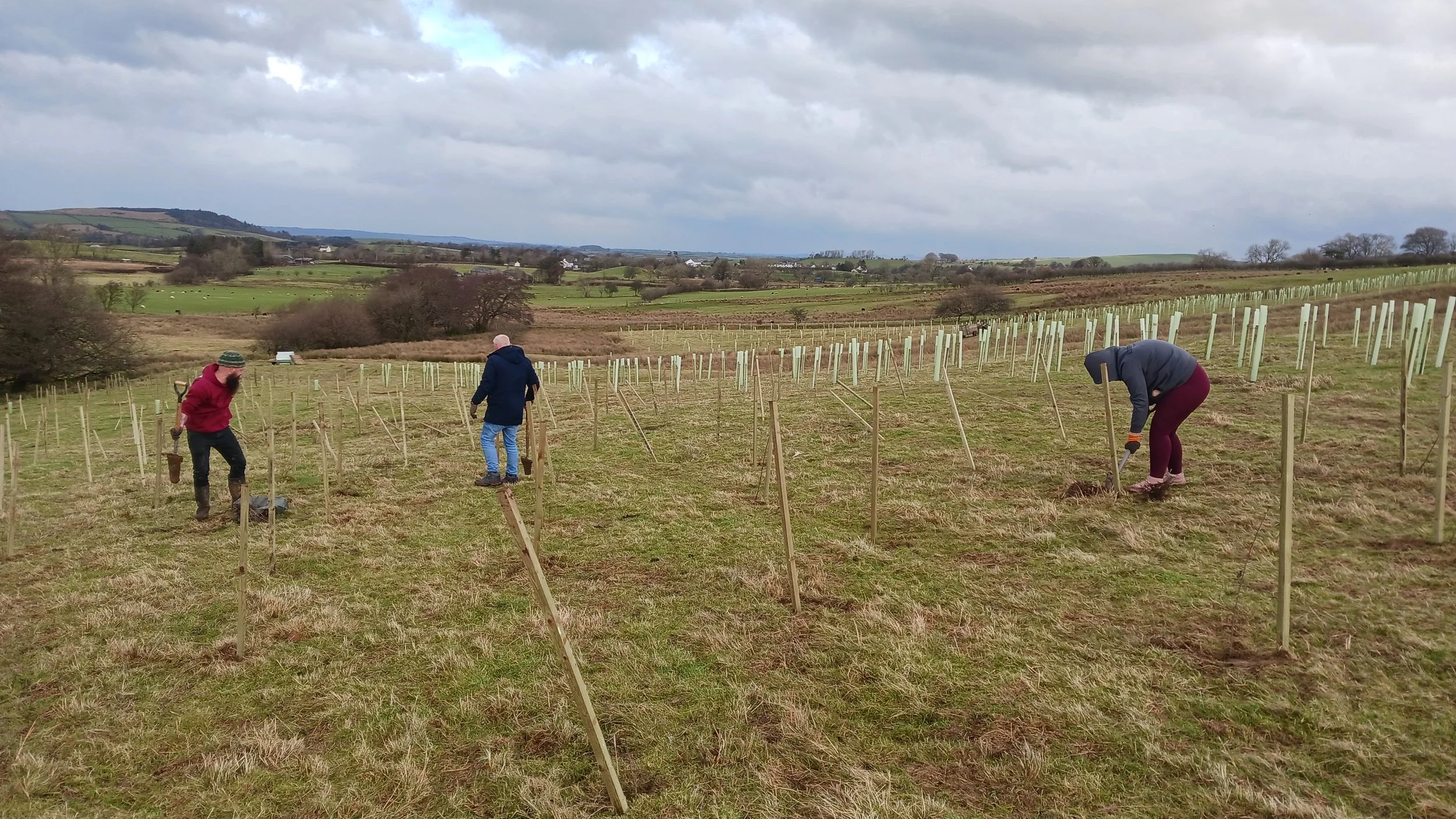
The site includes grazing pasture, watercourses, wet flushes and mature trees, providing an excellent opportunity to create a varied woodland that complements the existing landscape. The planting has been designed to strengthen ecological networks across the farm while improving the condition of important habitats that are already present.
Designing the Site
The woodland has been designed as a diverse mosaic of habitats rather than a single block of planting, creating a range of conditions that will benefit different species as the woodland matures.
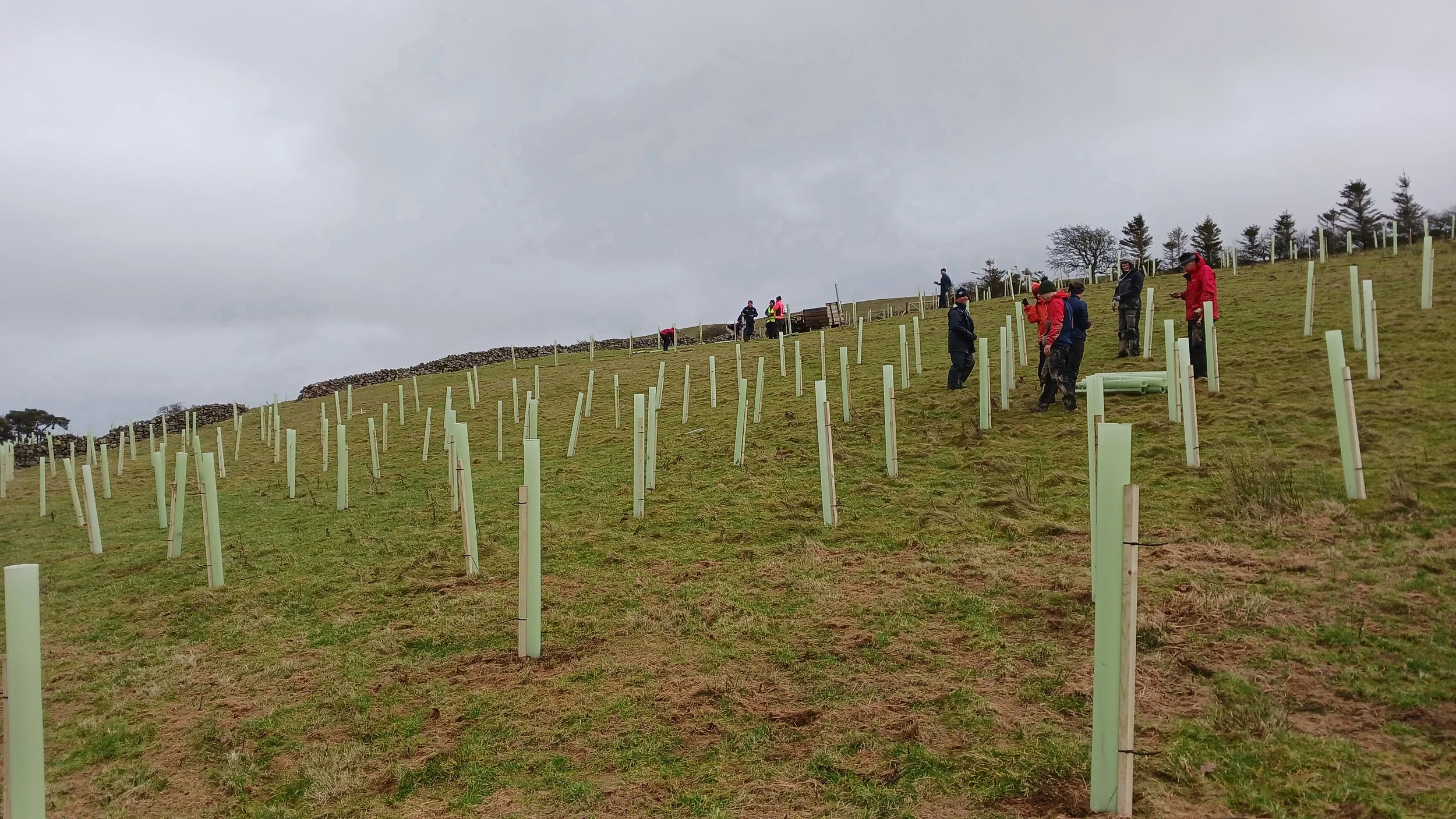
The project covers three separate compartments across the farm. The largest area, covering 13.7 hectares, has been planted primarily as oak-birch woodland with areas of wet woodland and scrub. A new path network has also been established through this compartment to provide public access. A second compartment of 5.5 hectares has also been planted with predominantly oak-birch woodland alongside wet woodland habitats, while a smaller area of riparian planting has been created alongside Smaithwaite Beck to improve water quality and provide shade for the stream.
The planting has been carefully designed to retain and enhance existing natural features, including wet flushes, mature and veteran trees, and watercourses. Together, these habitats will provide greater ecological diversity and create a more resilient landscape for wildlife.
Community Engagement and Planting
Community involvement was an important part of the project from the outset. Neighbouring landowners and the farm tenant were consulted during the planning process, while local views were sought through the Parish Council. A nearby church provided a base for volunteers throughout the planting programme.
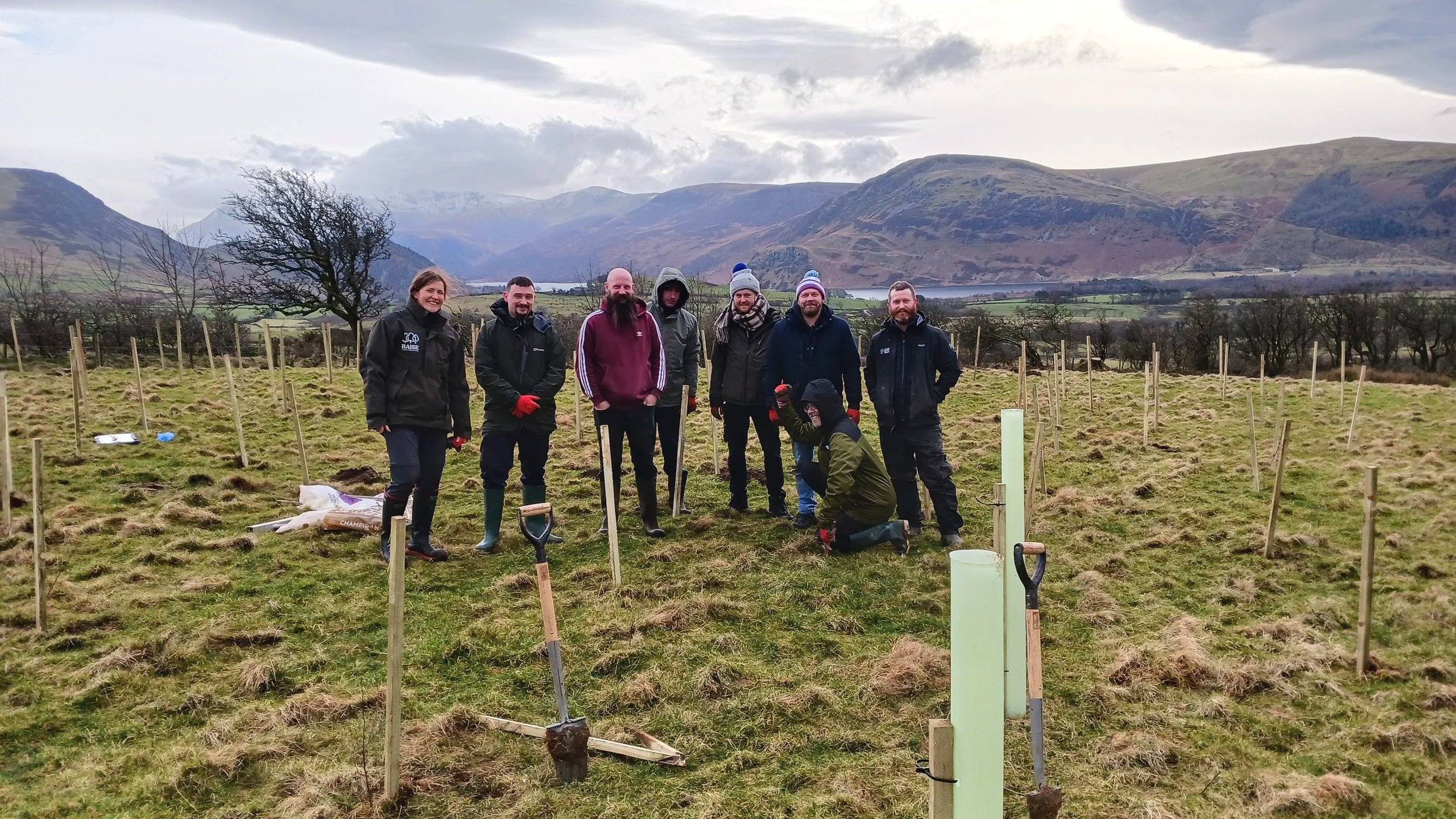
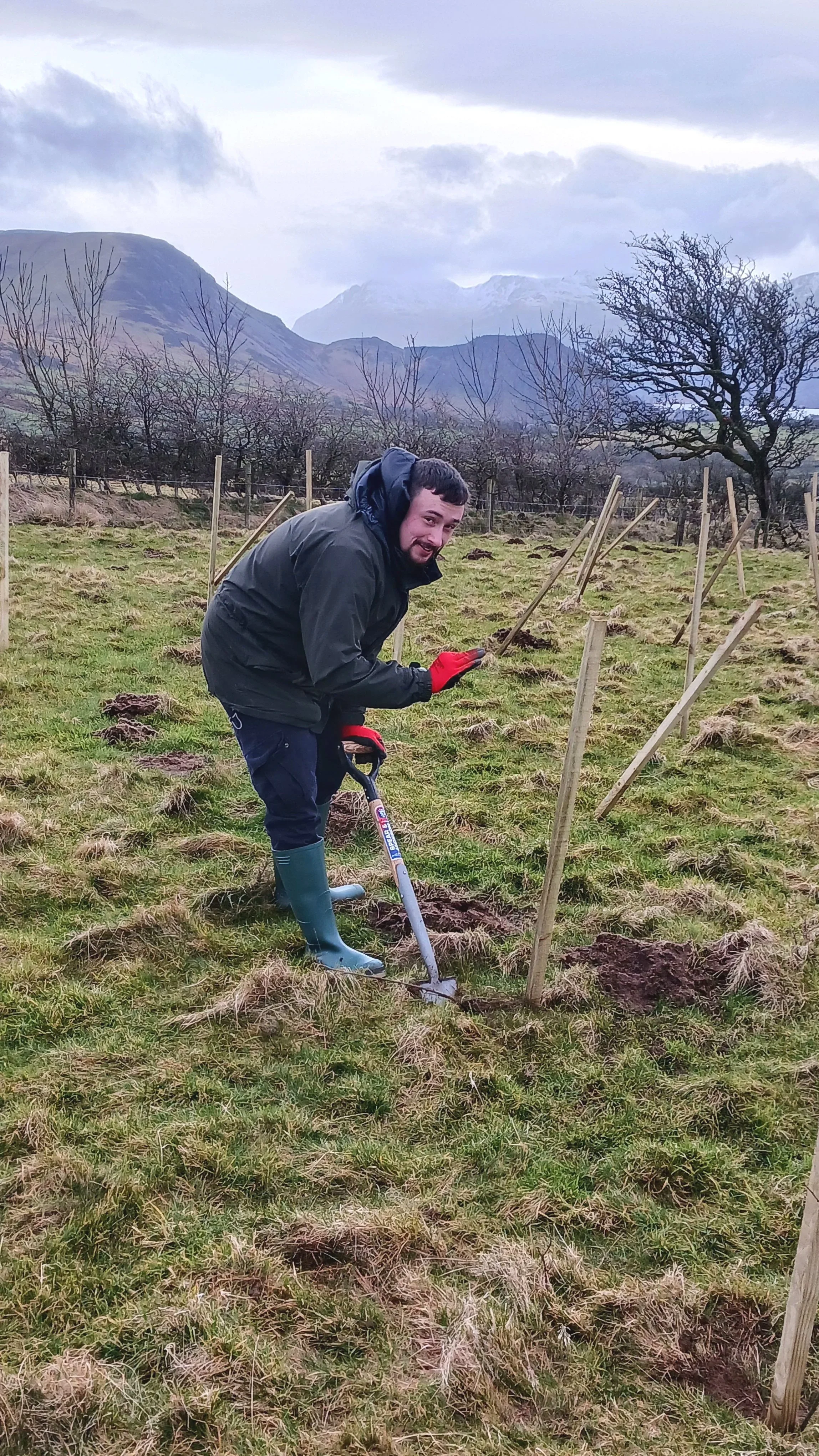
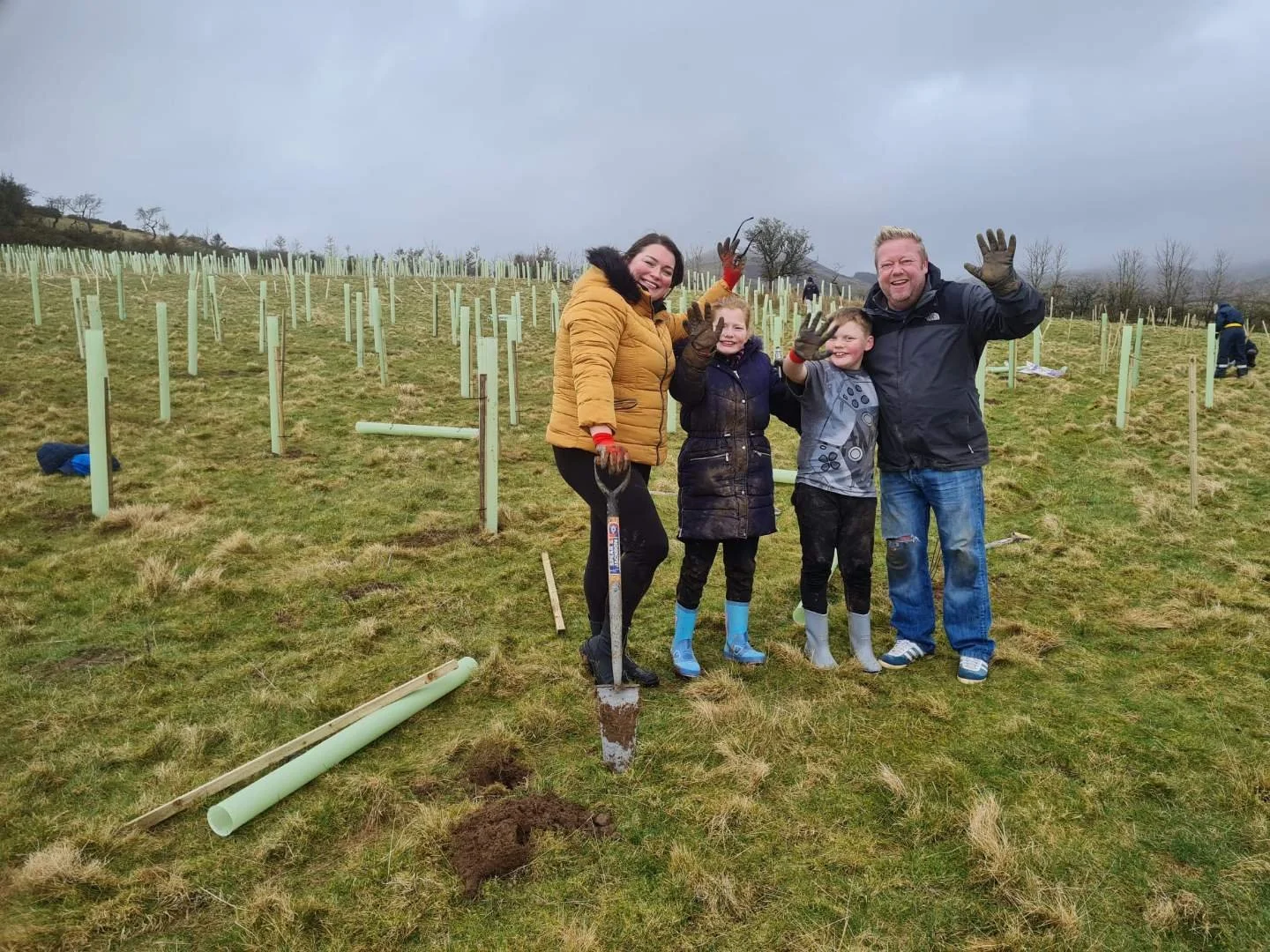
Planting took place across a series of volunteer days involving members of the local community alongside volunteers from West Cumbria Rivers Trust and Turning Point. Throughout the project, the Mitchell family worked alongside volunteers, attending every planting day and playing an active role in delivering the woodland.
This collaborative approach helped create a shared sense of ownership while giving volunteers the opportunity to contribute to a significant nature recovery project within their local landscape.
Looking Ahead
As the woodland becomes established, it will continue to develop into a diverse mix of habitats that support wildlife, improve water quality and strengthen ecological connections across the wider landscape.
The new public access route will provide opportunities for people to experience the woodland as it grows, while long-term management will focus on maintaining the variety of habitats across the site. Carbon captured by the woodland will also contribute to climate action, with carbon credits being sold through the Woodland Trust.
150
People engaged
22,650
Number of trees
20.01
Hectares of woodland planted
Project Impact
Contribution to Net Zero
The 22,650 trees will sequester carbon in their structure and in the soils beneath. Carbon credits from the woodland are being sold through the Woodland Trust.
Public Access and Community Engagement
A new permitted access footpath allows people to experience the woodland as it develops. Volunteer planting days brought together local residents, partner organisations and the Mitchell family to help establish the woodland.
Education and Collaboration
The project brought together landowners, local communities and partner organisations to deliver woodland creation through a collaborative approach, building knowledge and encouraging long-term stewardship of the site.
Water Quality and Natural Flood Management
Riparian planting alongside Smaithwaite Beck will provide shade for headwater streams, improve water quality and contribute to a healthier river catchment.
Biodiversity
The creation of oak-birch woodland, wet woodland, scrub and open glades will provide a diverse range of habitats for wildlife while protecting existing mature trees, wet flushes and watercourses.