By Andy Newton, Community Forester, Raise: Cumbria Community Forest
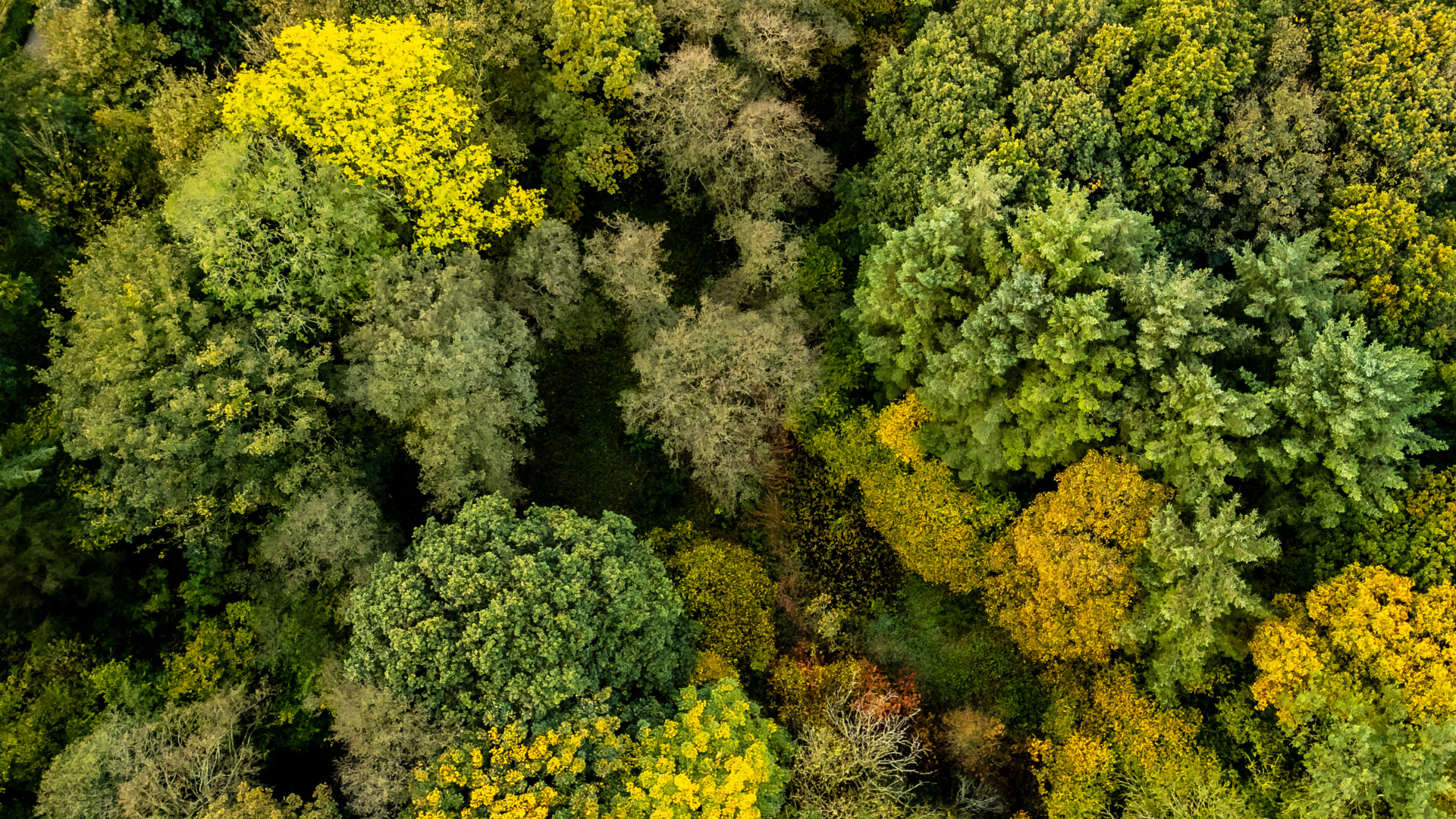
Conservation has become increasingly effective at recognising the importance of biodiversity. We understand that diverse ecosystems are generally more resilient, adaptable and capable of responding to change than simplified systems. A woodland containing a variety of species, structures and ecological functions is often better equipped to withstand disturbance than a monoculture managed for a single purpose.
Yet while we readily accept the value of biological diversity, we pay much less attention to the diversity of ideas that underpin our understanding of nature. In environmental management there can be an assumption that if nature can be classified, measured and quantified, it can be fully understood. These tools are undoubtedly important, but they represent only one way of interpreting the living world.
Perhaps conservation would benefit from something akin to biodiversity itself: a diversity of environmental interpretations.
How We Understand Nature
The question "What is a tree?", provides a useful starting point. Most environmental professionals would answer in scientific terms. A tree can be identified, classified and measured. It can be assessed for its carbon storage, biodiversity value, timber potential or contribution to ecosystem services. These are all valid perspectives, but they emerge from a particular intellectual tradition rather than a universal understanding of “nature”.
Much of this tradition can be traced to the Enlightenment. Few figures were more influential than René Descartes, whose philosophy helped establish a distinction between the observer and the observed. By separating the thinking mind from the material world, Descartes helped create the intellectual conditions for modern science. Nature became something that could be analysed systematically, broken into component parts and understood objectively.
There are benefits to this lens. The scientific revolution transformed human understanding of the natural world and provided the foundations for modern ecology, conservation and environmental management. However, it also encouraged a particular relationship with nature. Humans became observers standing outside the systems they studied. Nature became an object of analysis rather than something in which we were fundamentally embedded.
Descartes' influence extended beyond environmental thought. The binaries he helped reinforce, mind and body, reason and emotion, culture and nature, also shaped wider assumptions about what constituted legitimate knowledge. Rationality and objectivity came to occupy a privileged position, while emotional, experiential and relational ways of knowing were often treated as secondary.
How Scientific Classification Shapes Environmental Thinking
A similar story can be told through the work of Carl Linnaeus. Linnaeus revolutionised biology by developing a systematic framework for classifying living organisms. Modern ecology, forestry and conservation still depend on the ability to identify, categorise and compare species. Without classification, much of environmental science would be impossible.
Yet Linnaeus also reminds us that systems of classification are never entirely neutral. His classificatory ambitions extended beyond plants and animals to human populations, which he organised into categories associated with particular characteristics. His classification of humanity reflected the assumptions and prejudices of his time and contributed to a broader history of attempts to categorise human difference scientifically. These approaches would later become entangled with increasingly rigid racial hierarchies, scientific racism and eugenics.
The lesson for environmental thinking is not that classification should be abandoned. Rather, it is that all systems of classification simplify a more complex reality. They help us see certain things clearly but can obscure others.
Landscape, Culture and the Meaning of Nature
Historian Simon Schama provides another perspective on this issue. In Landscape and Memory, Schama argues that landscapes are not simply physical spaces but cultural constructions shaped by myth, memory and identity. Forests, in particular, have often played a significant role in how societies understand themselves.
His account of the German forest is especially revealing. Over centuries, woodlands became associated with ideas of ancestry, authenticity and national character. Forests were imagined not merely as collections of trees but as the birthplace of a people. By the nineteenth century, woodland landscapes had become deeply connected to narratives about German identity and belonging.
The danger emerged when these cultural associations became essentialised. Ideas of rootedness and connection to landscape were transformed into ideas about who legitimately belonged and who did not. Elements of this woodland mythology were later absorbed into Nazi notions of Blut und Boden ("blood and soil"), where landscape, race and national identity became tightly intertwined.
Schama's work highlights something important for conservation. Scientific interpretations of nature are not the only ones capable of becoming rigid and exclusionary. Cultural interpretations can do the same. Myths, memories and identities can be as powerful as scientific categories, and potentially just as limiting when they become the dominant lens through which nature is understood.
This brings us to a central challenge. If both scientific and cultural frameworks can become restrictive, how should we think about nature?
Nature as a Network of Relationships
One possible answer comes from Gilles Deleuze and Felix Guattari. Rather than understanding the world as a collection of fixed entities with stable identities, they emphasised multiplicity, relationships and processes of becoming. In this view, things do not possess a single, essential nature. They emerge through dynamic interactions with other things.
Applied to environmental thought, this perspective shifts attention away from isolated objects and towards relationships. A tree is not simply a specimen belonging to a particular species. It is part of an assemblage involving soil, fungi, insects, weather, animals and people. Its significance emerges through these connections rather than from any single defining characteristic.
A similar argument appears in the work of Tim Ingold, who challenges the tendency to view the world as a collection of separate objects. For Ingold, landscapes are not static features and organisms are not self-contained entities. Instead, both are products of ongoing relationships and processes that unfold through time.
Many Indigenous knowledge systems arrive at comparable conclusions through different intellectual traditions. Humans are understood not as detached observers but as participants within wider communities of life. The emphasis is placed on relationships, reciprocity and interdependence rather than separation.
None of these perspectives requires us to abandon science. Scientific knowledge remains indispensable for understanding ecological processes and responding to environmental challenges. However, it is only one way of knowing. Historical understanding, cultural memory, local knowledge, philosophy and lived experience can all contribute valuable insights into the meaning and significance of nature.
Why Conservation Needs Diverse Perspectives
This is where the analogy with biodiversity becomes useful.
Ecologists recognise that diversity contributes to resilience because different species bring different strengths and respond differently to change. A system dominated by a single species is often more vulnerable than one characterised by diversity. Perhaps environmental thinking operates in a similar way.
When a single framework dominates, whether scientific, economic, cultural or political, blind spots become more likely. Alternative perspectives are marginalised and important dimensions of nature can be overlooked. A diversity of interpretations creates opportunities for challenge, adaptation and learning.
Conservation has made enormous progress in recognising the value of biodiversity. There may be value in applying the same principle to environmental thought itself. The goal is not to replace science with culture, or culture with science. Nor is it to identify a single correct interpretation of nature. It is to recognise that nature can be understood in multiple ways, each revealing something important and each remaining incomplete on its own.
If biodiversity strengthens ecosystems by preventing ecological monocultures, then a diversity of environmental interpretations may strengthen conservation by preventing intellectual ones.